Deliverable #35 · 2026-10-22
The characters stand like people — twelve bodies on a standard rig and motion-captured clips
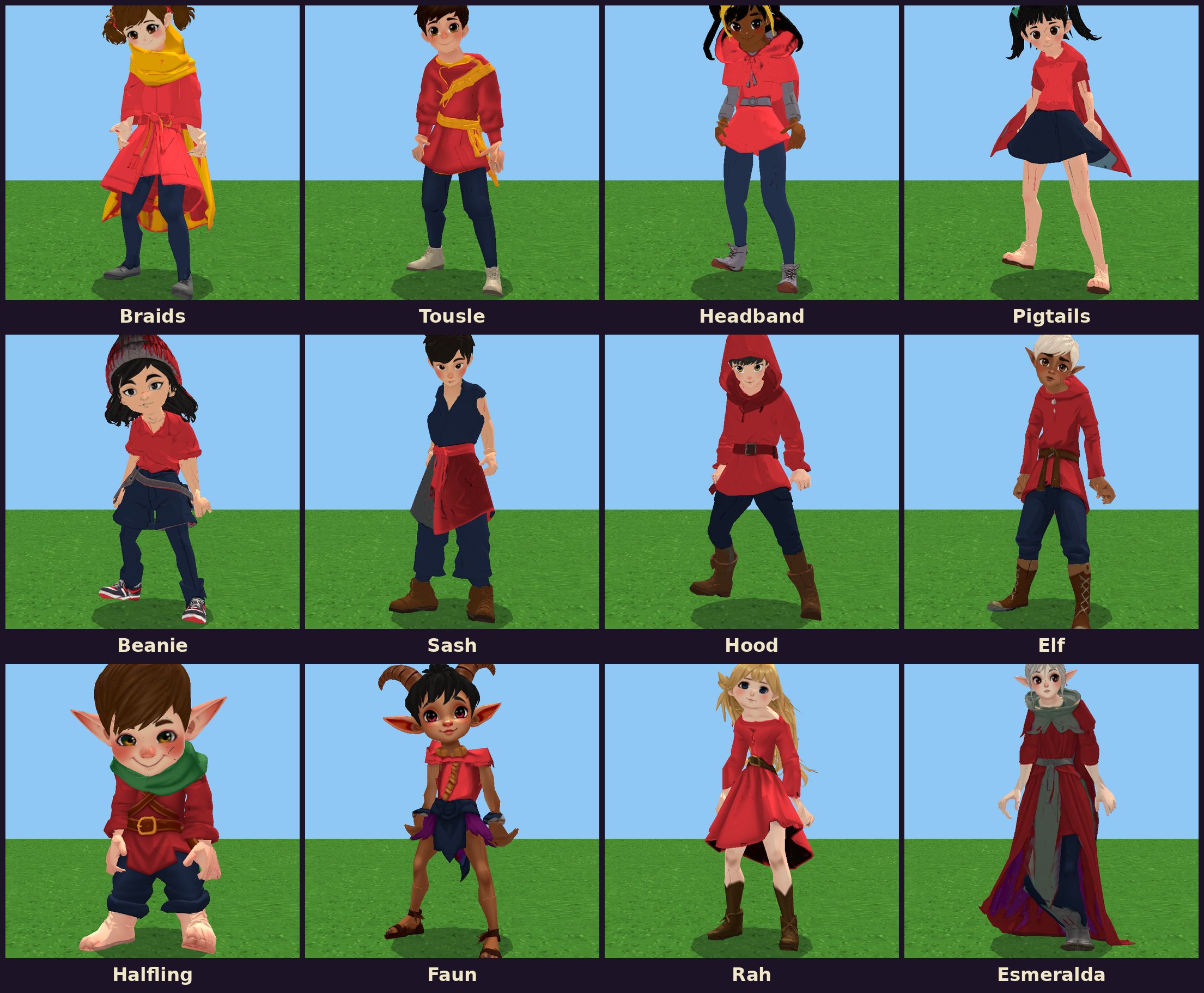
Eleven of these can be chosen on the account screen; Rah is given, never chosen. Each is a
Meshy body from the look-dev rounds (deliverable 32 was the first), cut into head, torso and
legs, wearing the player’s shirt and pants colours. What is new today is how they stand and
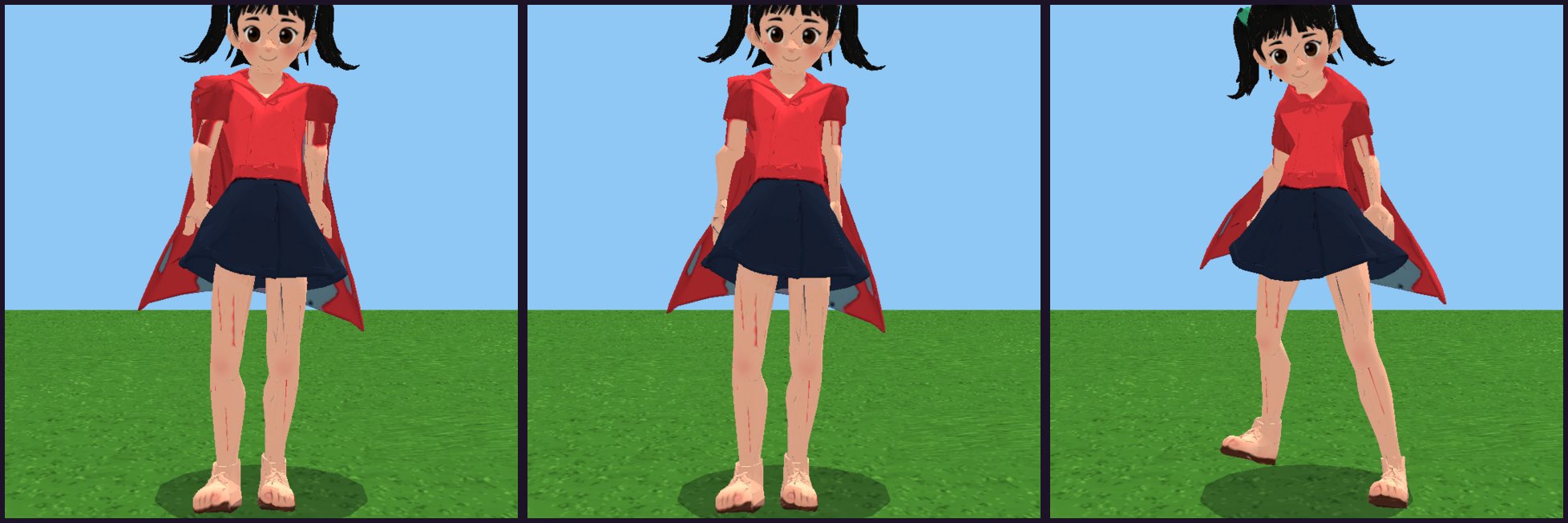
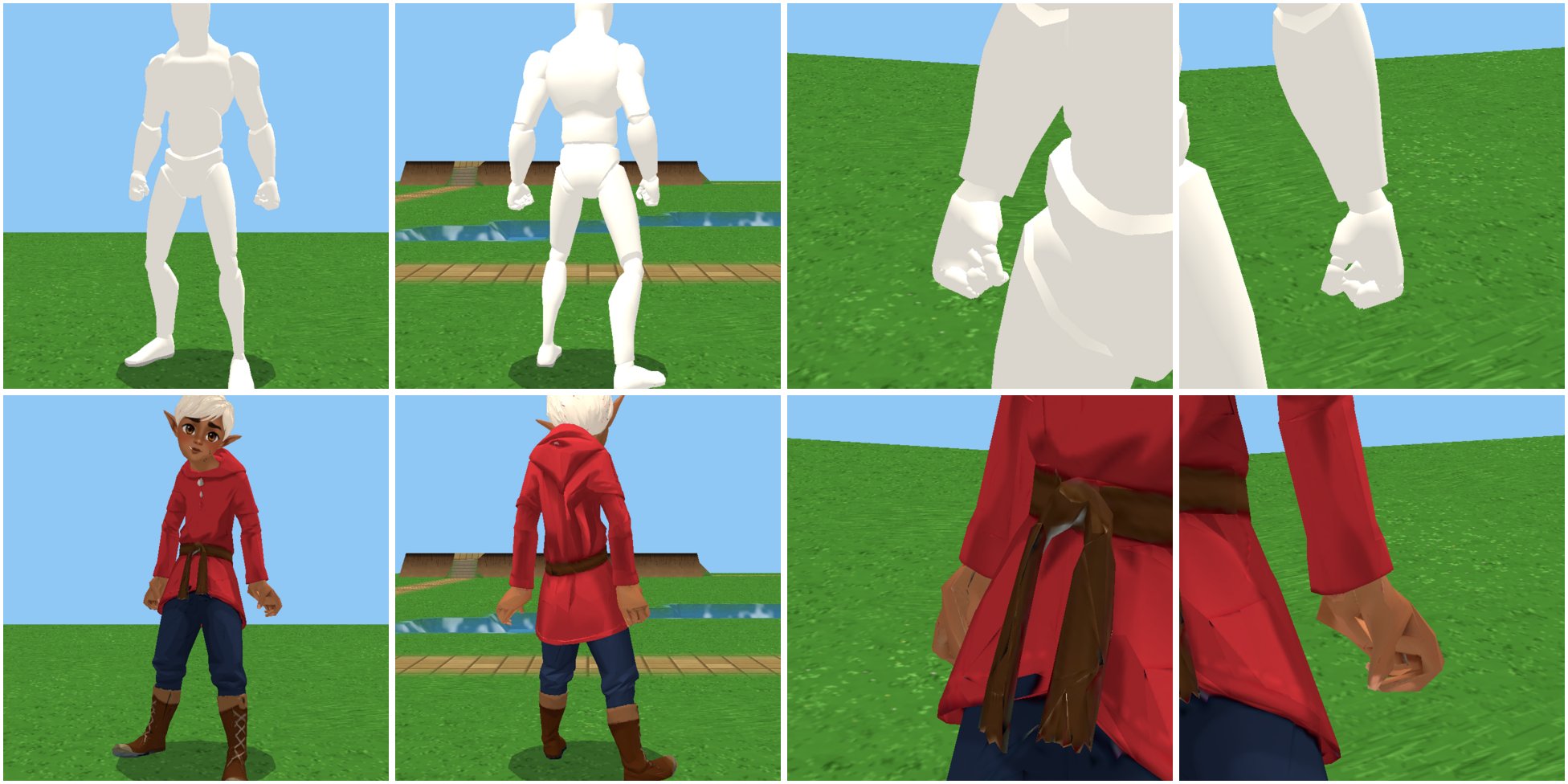
walk: the arms hang, the wrists are straight, the hands are loose fists, the shoulders are
where shoulders go. It is on the web at /play and in spellgrove-v44.apk.
What was tried, and where it landed
Kris, looking at the first close-up camera the night before: “the hands are still palms facing outwards… surely the way arms and hands sit is a solved problem of 3D models — why are we struggling SO much with it?” The short answer: a Meshy body comes with a rig that stops at the wrist (no finger bones) and plays generic clips retargeted onto that rig, so the hand is baked into the mesh in the spread A-pose it was generated in, and the arms sit wherever the generic clip puts them. Three approaches were taken in two days:
- A fixed roll and a curl (
hands.py, 21 October): every upper arm rolled 60°, the fingers bent in the mesh. Judged by eye per body on sheets. Palms ended forward on most bodies and out on some, because every body’s hand sits differently in its hand bone. - A rest pose solved per body (
rest_pose.py, that evening): the skeleton posed through the idle as it plays, the arm, forearm and wrist turned by measured angles. Better — Kris: “better, still weird… the arms seem wrong now, while the hands seem better.” Parked with a note that there must be an easier way. - The standard way (22 October): Godot’s own humanoid profile gives every body the standard skeleton and rest pose, and one shared library of motion-captured clips — Quaternius’s Universal Animation Library, CC0 — plays on all of them. No bone track is edited by hand. What the mesh must still say is done once per body by measurement: the wrist straightened (Meshy models the hand drooping 7°–46° off the forearm), the palm turned to face down as the profile assumes, the spread fingers closed into a loose fist. Kris, on the library’s own mannequin: “looks perfect — can we match that?”
Mixamo — the free web auto-rigger most indie games use — was considered for the same job and set aside: a third-party site, a manual pass per body, no API. Godot’s retargeting and a CC0 library gave the same result offline, in one command per body.
Not perfect, and known: the fists are low-poly knots up close; Esmeralda’s long fingers read as a claw; the walk and run pace against the glide is a number per clip, judged on a phone from here. Kris’s verdict, and the reason this page exists: “it isn’t perfect, but it’s a long way from where we started, and much better.”
Sources & artifacts
-
site/public/images/game/land-of-lor/2026-10-22-characters-sheet.jpg -
docs/handoff/lookdev-round3.md -
docs/handoff/lookdev/round5/ -
tools/bodies/standardise.py -
tools/bodies/hand_bind.py -
game/world/client/bodies/clips/
Also available as raw markdown.